
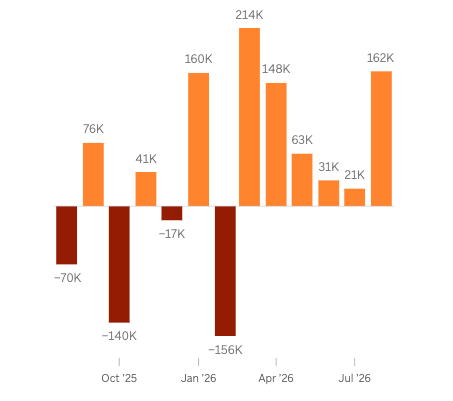
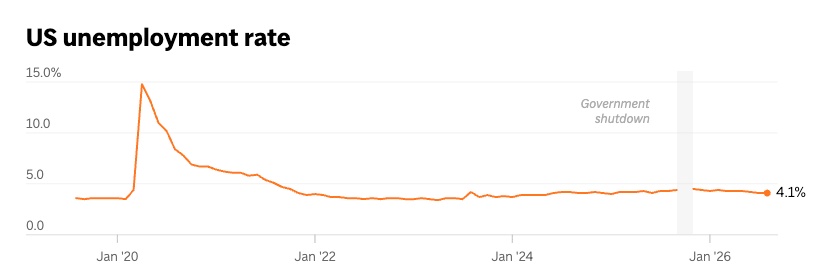
After months of mixed economic signals, a recent employment report offered encouraging news for workers and businesses alike. According to reporting by the Associated Press, employers added significantly more jobs than economists had anticipated, while the unemployment rate remained relatively low. The stronger-than-expected hiring numbers suggest that the labor market may be more resilient than many observers had feared.
At first glance, the report appears to signal a healthy economy. Businesses expanded payrolls, labor force participation increased, and revisions to earlier employment data showed stronger hiring than previously reported. Taken together, these developments point to continued demand for workers despite ongoing economic concerns.
Yet the picture is more complex than the headline numbers suggest.
While job growth remains an important indicator of economic health, many households continue to face financial pressures. Inflation remains a concern for consumers, particularly when it comes to everyday expenses such as fuel, housing, food, and other necessities. Even when employment remains strong, rising costs can erode the purchasing power of wages and leave workers feeling financially strained.
The Associated Press noted that wage growth has slowed compared to previous years. While paychecks may be increasing, they are not necessarily rising fast enough to offset higher living costs in every household. This disconnect helps explain why positive economic statistics and public perceptions of the economy do not always align.
Another important factor is the uneven nature of job growth. Some industries continue to add workers at a healthy pace, while others remain cautious about hiring. Economic transitions rarely affect all sectors equally. Businesses facing higher operating costs, supply chain concerns, or uncertainty about future demand may delay hiring decisions even when broader employment numbers appear strong.
For employers, the labor market remains challenging. Companies continue to compete for qualified workers, particularly in occupations requiring specialized skills, technical expertise, or significant experience. Recruiting and retaining employees has become a strategic priority across many sectors as organizations seek to balance labor costs with operational needs.
For workers, the environment presents both opportunities and uncertainties. Job seekers may find more openings than were available during slower periods of hiring, but they also face concerns about inflation, the cost of living, and the possibility of future economic slowdowns. Many individuals are increasingly focused on job stability, benefits, and long-term career prospects rather than salary alone.
The latest employment figures also highlight an important reality: economic health cannot be measured by a single statistic. Strong hiring is encouraging, but economists, policymakers, business leaders, and consumers often look at a range of indicators, including wage growth, inflation, consumer spending, business investment, and labor force participation, when evaluating the overall condition of the economy.
Viewed through that broader lens, the current labor market appears resilient but not without challenges. Businesses continue to hire, unemployment remains relatively low, and workers have opportunities available. At the same time, inflationary pressures and broader economic uncertainties continue to influence both employer and consumer behavior.
Analysis
The most significant takeaway from the latest employment report may not be the number of jobs created but what it reveals about the economy’s underlying resilience. Despite persistent concerns about inflation and economic uncertainty, employers are still adding workers and expanding payrolls. That suggests confidence in future demand and a labor market that remains fundamentally stronger than many analysts anticipated.
At the same time, employment numbers alone do not tell the entire story. For many Americans, economic well-being is measured less by unemployment statistics and more by whether their paycheck comfortably covers monthly expenses. As long as households continue to face pressure from rising costs, economic sentiment may remain cautious even in the face of positive employment news.
Source
Wiseman, Paul.“US Hiring Bounces Back Strongly in August, Intensifying the Focus on Inflation.” Associated Press, September 4, 2026. Based on reporting regarding August employment growth, unemployment trends, wage growth, and labor market conditions. [apnews.com], [ace.newsday.com]


Leave a Reply